Geppetto Trapped Inside Pesce-cane
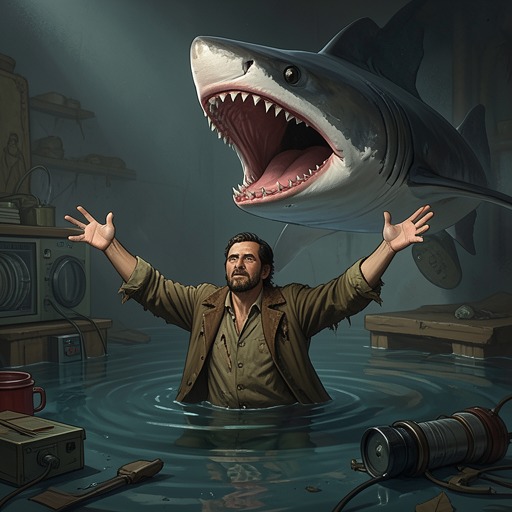
Pinocchio (Tania Zamorsky Edition)Geppetto’s confinement inside the Great Shark turns a long, helpless separation from Pinocchio into a reunion—and then into a shared escape. For two years he survives in the creature’s interior by salvaging the provisions of a swallowed merchant ship. When Pinocchio finally finds him, that improvised refuge is nearly spent: the pantry is empty, and a single candle remains. Geppetto’s captivity is therefore both a survival ordeal and the setting in which father and son reverse their roles, as Pinocchio guides him toward freedom.
Circumstances of the Confinement
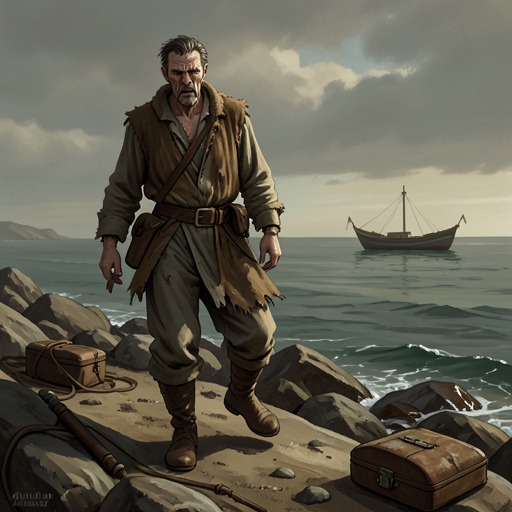
Geppetto’s imprisonment begins at sea. After Pinocchio recognizes him in a small boat and signals for him to return toward shore, a large wave overturns the craft. The Great Shark is nearby; it rushes toward Geppetto in the water and swallows him. The suddenness of the capture leaves him with no control over where he is carried or how he might get out. His account makes the creature’s interior the consequence of a failed search: Geppetto had been at sea trying to find Pinocchio when the storm and the Shark intervened.
Geppetto tells Pinocchio that he has been inside for two years, a stretch that felt to him like two centuries. That contrast conveys the confinement’s measure from the captive’s perspective: its duration is not merely a number but an apparently unending separation. The reunion supplies Pinocchio with the missing history of his father’s disappearance, while Geppetto’s worn-down circumstances show what those years have cost him.
A Refuge Made from the Swallowed Ship
Geppetto survives because the same storm that overturned his boat also sank a merchant vessel. Its sailors escaped, but the Great Shark swallowed the ship after swallowing Geppetto. The creature took in the entire vessel in one gulp and later spat out only its mainmast, which had caught between its teeth. Inside the Shark, the cargo became a store of provisions for the stranded old man.
The ship’s preserved meat, hard bread, wine, raisins, cheese, coffee, sugar, candles, and matches sustained Geppetto for two years. The list makes his survival concrete: the swallowed vessel is not simply a marvel inside a monster but a finite stock of food and necessities on which his life depends. Those supplies also explain how he has been able to keep a candle burning and answer Pinocchio’s questions about light and matches.
By the time they meet, however, the arrangement has reached its limit. Geppetto tells Pinocchio that the pantry contains nothing and that the candle they can see is his last. His captivity has become an immediate crisis, not a condition that can continue indefinitely. Without provisions or another light, the two face darkness inside the creature; their reunion arrives just as Geppetto’s means of enduring the confinement run out.
Reunion and the Route to the Mouth
Pinocchio asks how long Geppetto has been inside and how he has managed to live there. Geppetto’s answers make their reunion an exchange of testimony: Pinocchio learns the circumstances of his father’s disappearance, and Geppetto explains the shipwreck, the swallowed cargo, and the dwindling stores. The conversation changes the practical stakes as well as restoring their connection. The remaining candle offers a temporary light, but waiting is no longer a viable plan.
Pinocchio takes the candle and leads Geppetto through the Great Shark’s body and stomach. They reach the beginning of its enormous throat and pause to look for a suitable moment to escape. The geography of the passage matters: they must make their way through the creature rather than simply open a door or find a ready exit. Their progress depends on reaching the mouth and judging when it is safe to attempt the final passage.
The Great Shark’s condition creates that opportunity. It is very old and suffers from asthma and palpitations, so it has to sleep with its mouth open. From the throat, Pinocchio can see the starry sky and moonlight beyond the enormous open mouth. He observes that the Shark is asleep, the sea is calm, and the light outside is sufficient to see by. The opening that has kept the captives enclosed is now a visible way out, but only because the creature’s sleeping condition and the stillness of the sea briefly align.
Escape and Change of Roles
Pinocchio takes Geppetto by the hand and leads him back up through the throat, across the tongue, and over three rows of teeth. Before the leap into the water, he tells his father to climb onto his shoulders and hold tightly; he will manage the rest. This reversal is physical and practical: the father who set out by boat to search for his son now depends on that son to carry him beyond the Shark’s jaws.
Once Geppetto is settled on his back, Pinocchio dives into the sea and swims. The water is calm, the moon shines brightly, and the Great Shark remains asleep, undisturbed even by the escape. Geppetto’s confinement thus ends not through rescue from outside but through the pair’s joint movement from the creature’s interior to open water, with Pinocchio bearing the immediate burden of their escape.
The state’s decisive change is from enforced separation to shared danger and action. Geppetto’s two years inside the Great Shark establish the cost of his search, while the empty pantry and final candle make the reunion urgent. The passage from stomach to throat, and then from mouth to sea, turns the Shark’s interior from a place of survival into a route out. Geppetto is no longer alone in captivity; Pinocchio’s guidance and strength make escape possible, completing the transition from missing father to rescued companion.